Client work
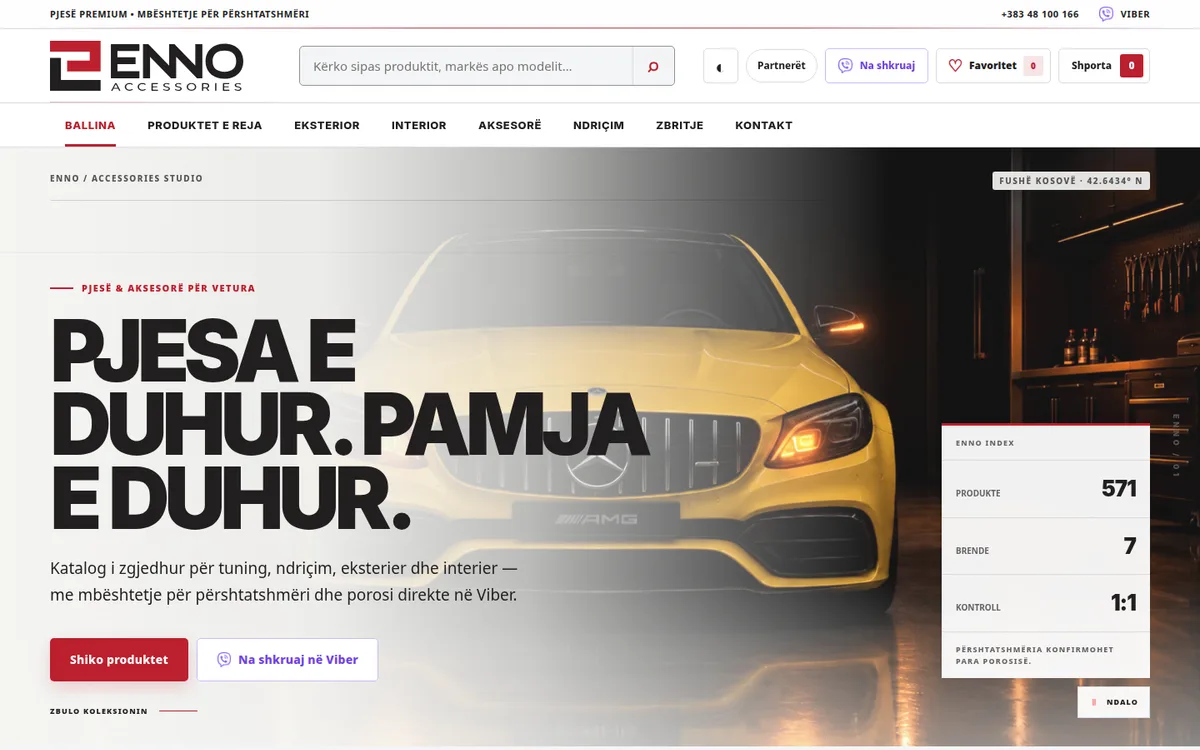
Enno Accessories
Client website
A custom website and product presentation built around Enno’s brand and catalogue.
View project01/01 Selected work
Selected work
Websites shaped around the businesses they belong to.
Client website
A custom website and product presentation built around Enno’s brand and catalogue.
View project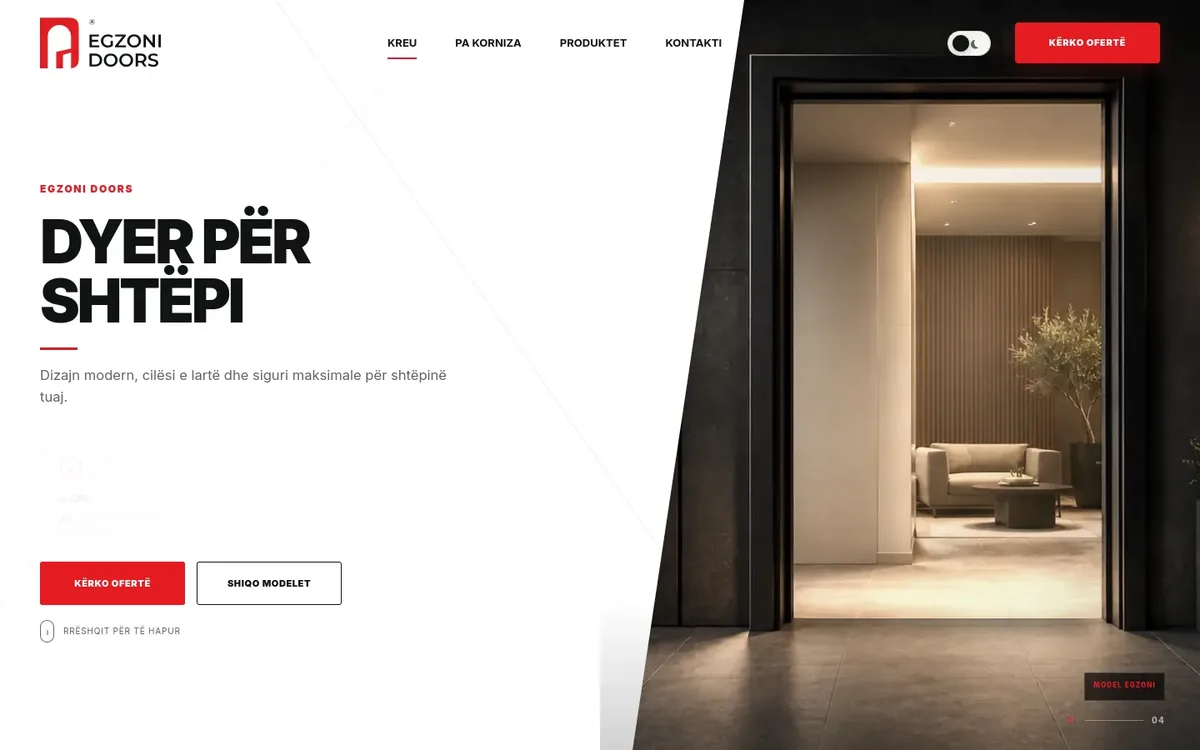
Client website
A distinctive door-company website focused on product presentation and enquiries.
View project01/02 Selected work
Client website
A product catalogue with the character of the business behind it. Enno’s accessories get room to be seen, found and explored.
Built aroundA real catalogue. Customers who want to find the right part.
The homepage introduces the brand and leads into its product world. Search and categories give a larger catalogue a useful structure.
Strong product imagery, direct Albanian copy and a distinct visual identity carry through the experience.
Structured content keeps products manageable. Dated Google PageSpeed reports let you inspect the public site for yourself.
01/03 Selected work
Client website
The product deserves the spotlight. A visual website for Egzoni Doors that lets the doors do the talking and makes the next conversation easy.
Built aroundA product-led business. People choosing something for their home.
Large door imagery establishes the material, the detail and the character of the range before the visitor needs to read a long pitch.
Product exploration leads to a direct enquiry. The mobile call action stays within reach.
The live site has its own dated Google PageSpeed receipts. Open the report or run a new test against the public URL.
01/04 Selected work
Start a project
A useful first conversation needs three things: what you do, who needs to use it, and where the current process gets in the way.
Map the people, the work and the constraints. Agree on what success looks like.
Shape the content and interface around one useful path. Put real material in front of you early.
Implement, review and test the agreed scope. Keep the next decision visible.
Bring a rough idea, a stubborn workflow, or a website you’ve outgrown.
02/01 Business tools
Business tools
Content, point of sale, and communication. Each at its own stage of development.
Content management & publishing
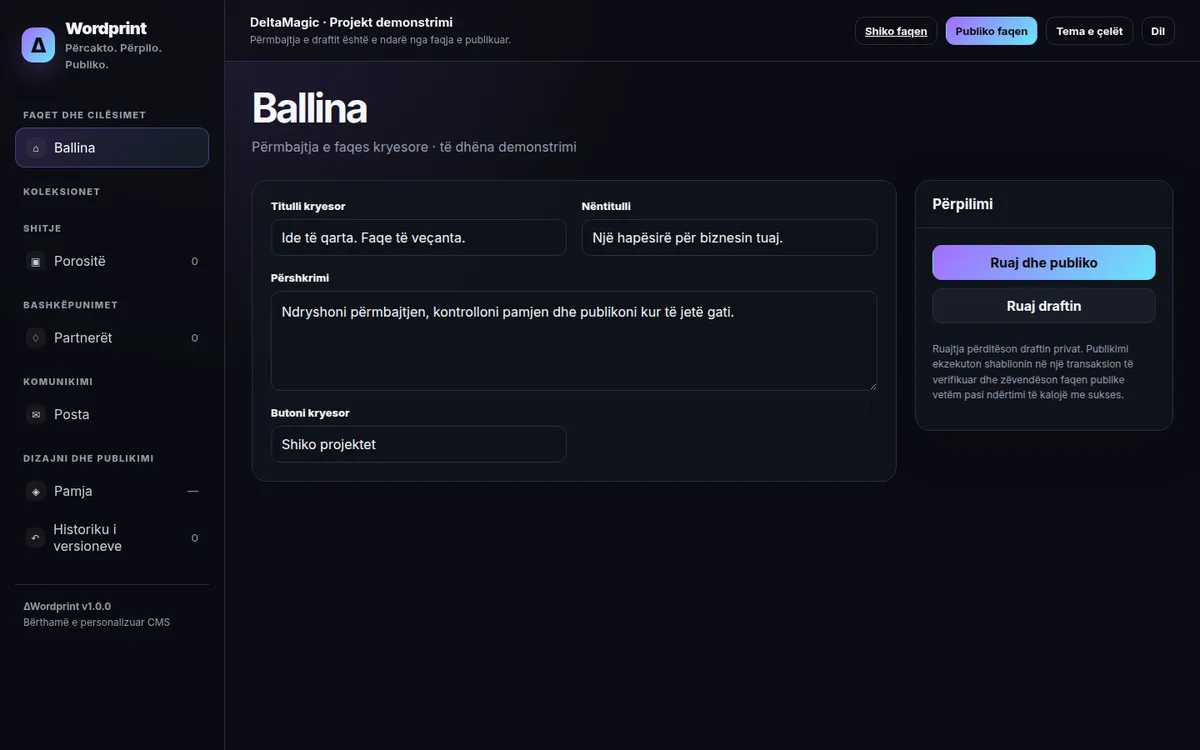
Structured content, controlled publishing, and custom websites that remain yours to shape.
View project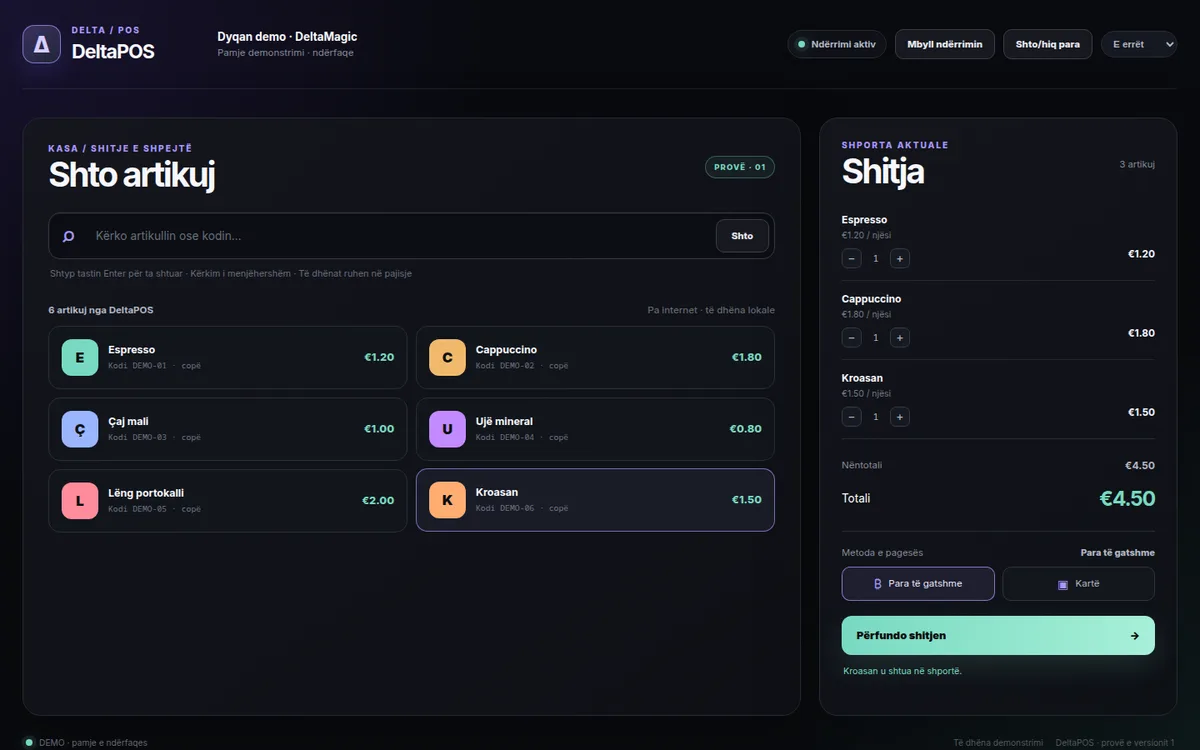
Point-of-sale software
Local-first point-of-sale software being shaped around everyday shop workflows.
View project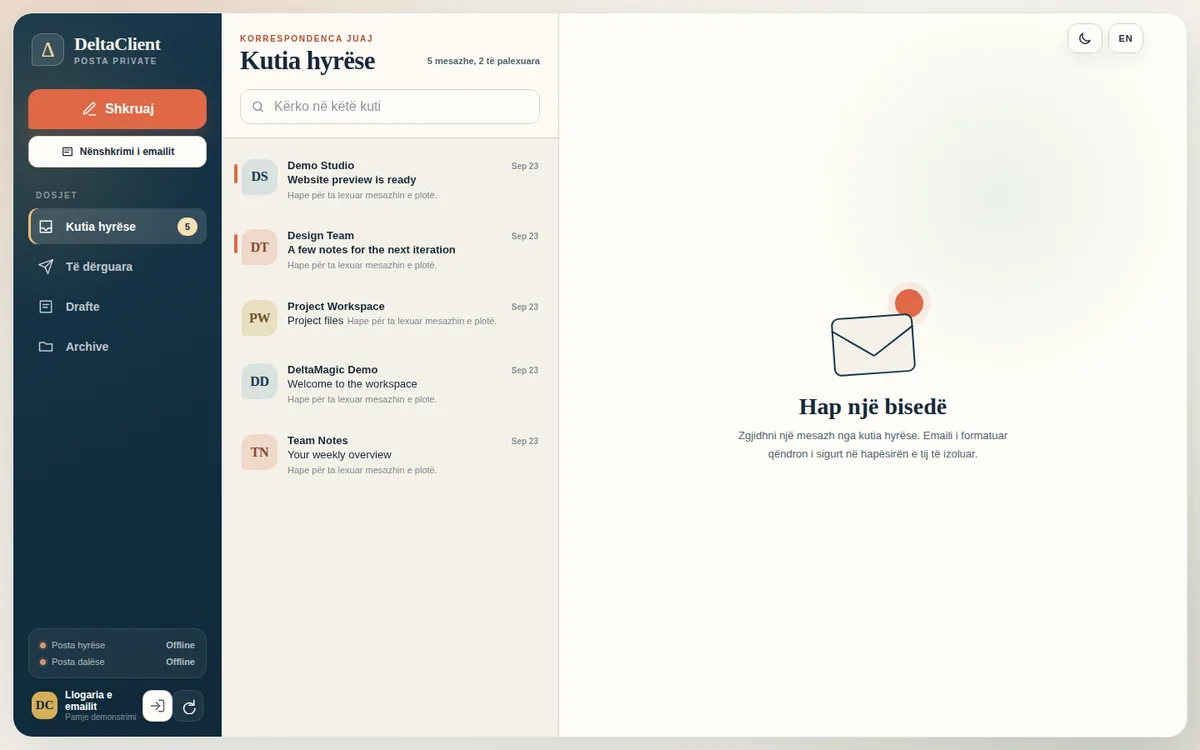
Focused webmail
A focused webmail interface built around client inboxes.
View project02/02 Business tools
Content management & publishing
Content has a shape. Wordprint gives editors a focused place to maintain it and a deliberate path from draft to public page.
Built aroundTeams maintaining their own content and product information.
Fields follow the customer’s content model. Editors work with meaningful content instead of rebuilding page layout for every change.
A private preview makes a draft reviewable before it becomes the public website.
Validated content and a versioned template produce a staged site. Publication activates the prepared output.
02/03 Business tools
Point-of-sale software
A cashier’s workspace should follow the work. DeltaPOS brings the basket, the catalogue and the shift into one focused local interface.
Built aroundThe people at the counter, and the stock behind it.
Find products, build a basket and commit the transaction through the local business layer.
Catalogue and stock movements belong to the same workflow, including lot and best-before handling in the pilot implementation.
Opening, cash movements and closing have explicit records. Hardware and fiscal requirements still need their own acceptance.
02/04 Business tools
Focused webmail
Mail, with room to think. A focused webmail interface built around the folders, conversations and replies a client actually uses.
Built aroundDaily communication, with an Albanian-first interface.
Folders, message lists and read state keep the mailbox navigable on desktop and smaller screens.
Compose, reply, reply all and attachments stay inside the same focused mail workflow.
External images remain blocked until the sender is trusted. Message rendering is contained, with a plain-text fallback.
03/01 GO! rendering
Scene compiler & WebGPU renderer
Structured scenes, brought to life. GO! connects a scene compiler to a WebGPU renderer, with explicit ownership of the resources behind the image.
Built aroundDevelopers building a deliberate rendering path.
The input describes objects and their relationships. Validation gives the scene a defined boundary before drawing begins.
Frames, resizing and suspension belong to the host’s lifecycle. Rendering does not need to own the whole application.
RMR is a real consumer: its game simulation drives the action while GO! handles the visible scene. Explore the captured result next.
03/02 GO! rendering
RMR / GO!
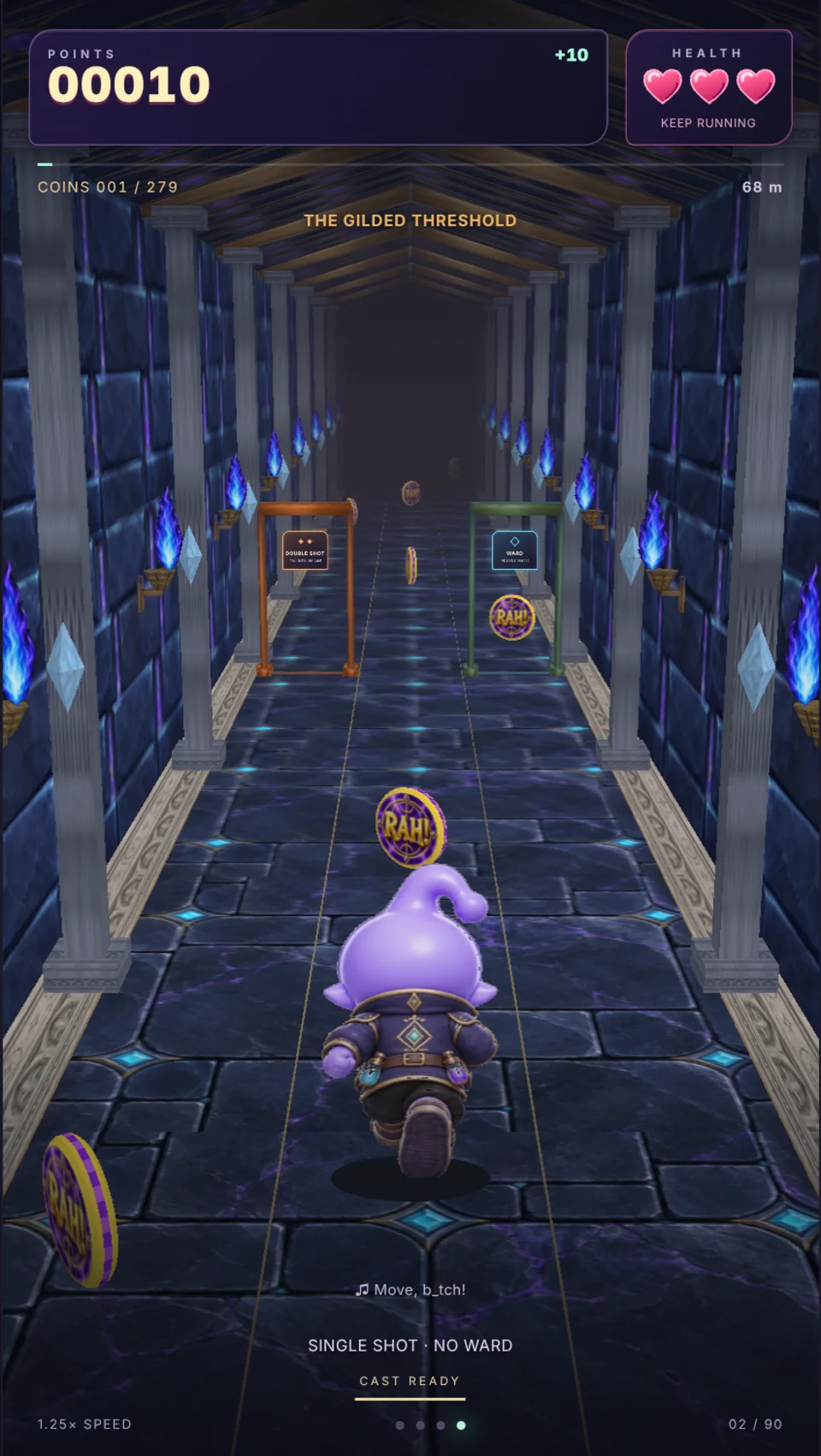
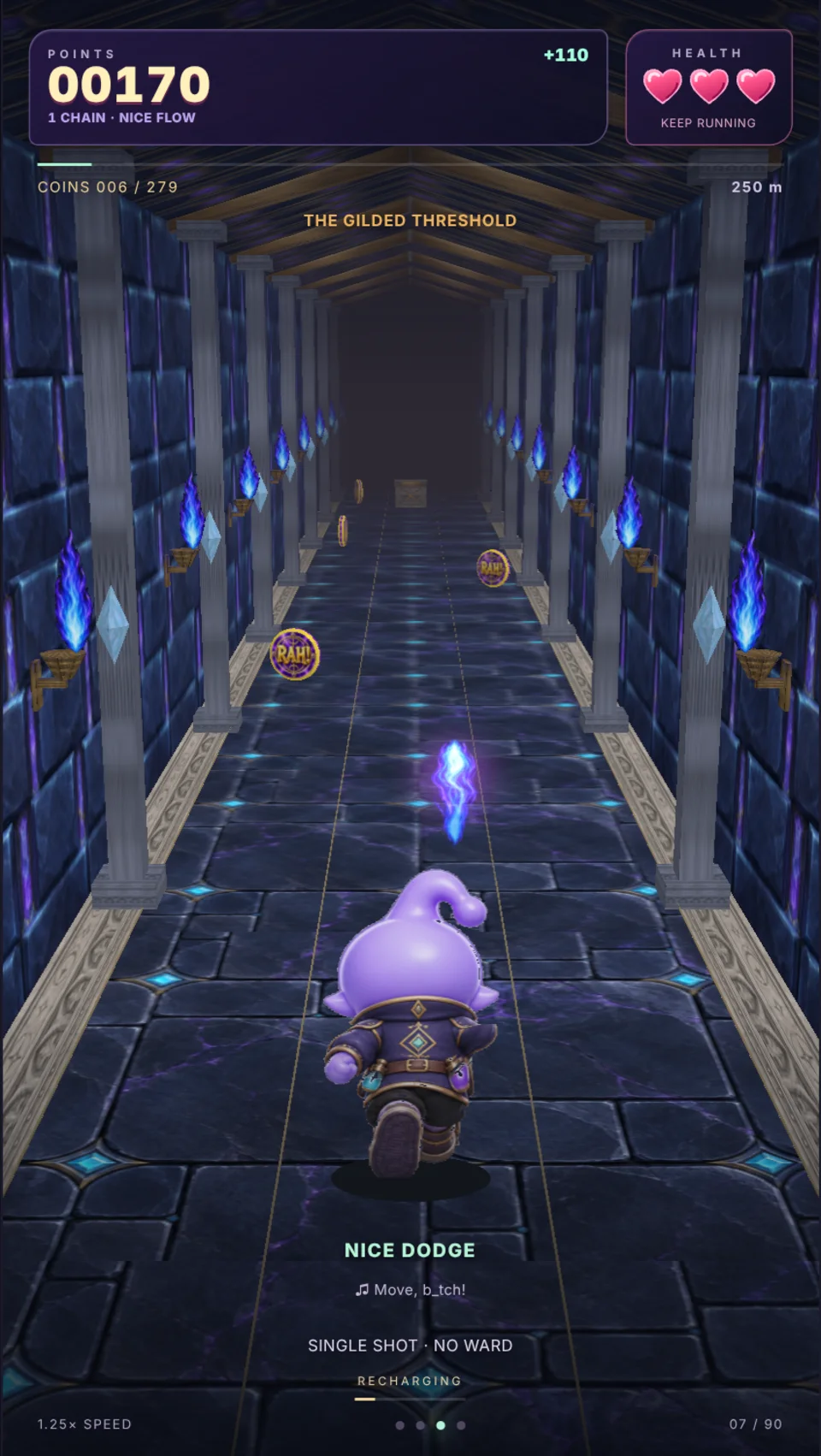
This is Run Milav, RUUUN! — our own runner, drawing its world through GO! These are frames from the actual game.
03/03 GO! rendering
GO! / WEBGPU
A small, deliberate chain: give the renderer a scene it understands, then keep control of its lifetime.
Objects, transforms and resources have explicit places in the scene description. The compiler works with structured input.
Scene structure, references and supported capabilities are checked before the renderer commits resources. Invalid input has somewhere to stop.
The host controls frames, resizing and suspension. The renderer owns its drawing resources and their disposal.
03/04 GO! rendering
GO!
GO! is a scene compiler and WebGPU renderer in development. It is not a complete game engine. Browser and device support depend on the specific build and workload.
In the core
Still beyond this scope
04/01 ∆Positron
Desktop application runtime
A familiar way to build an interface. A deliberate way to reach the machine. Positron puts web presentation and native authority on clearly defined sides.
Built aroundLocal desktop applications with explicit capabilities.
Use web technology for presentation, rendered by the system WebView. The operating system’s web runtime remains a dependency.
A Rust-controlled runtime checks declared capabilities before native operations can be dispatched.
DeltaPOS is the practical pilot: an actual cashier interface exercising the desktop foundation as it develops.
04/02 ∆Positron
∆POSITRON / DELTAPOS
DeltaPOS gives Positron a practical application: a cashier interface, local business logic, and explicit access to the machine around it.
Find an item, build the basket, finish the sale.
A local business layer handles catalogue, stock and shift records.
Connected devices are a separate qualification step.
04/03 ∆Positron
∆POSITRON
The interface requests an operation. The runtime checks the declared capability before the local operation can proceed. This is a conceptual diagram, not live telemetry.
A web interface asks for a specific operation. Showing a button does not grant machine access.
The runtime checks the application’s declared capabilities before dispatching the request.
The native side performs the permitted local operation. A missing capability prevents dispatch.
04/04 ∆Positron
∆POSITRON
Positron uses the system WebView and a Rust-controlled runtime. Platform parity, signing, installation and hardware support remain development and qualification work.
The approach
The remaining work
05/01 Our games
Games
Music, momentum, and a world of our own. Two games taking shape.

Rhythm Arcade Hero
Our rhythm-game project, where music, visuals and gameplay meet.
View projectThree-lane arcade runner
A three-lane arcade runner starring Milav. Fast decisions, forward motion, and our own character at the centre.
View project05/02 Our games
Rhythm Arcade Hero
The track sets the pulse. You bring the timing. RAH! is our rhythm-game project, where music, readable patterns and an original visual world meet.
Built aroundPlayers who feel the next beat coming.
Notes and lanes turn a piece of music into a sequence of decisions. Timing is the centre of the experience.
Original project artwork gives the music a visual home. The image shown here is artwork, not a gameplay capture.
This is a look into ongoing game development. A public playable release is not announced by this page.
05/03 Our games
Three-lane arcade runner
Three lanes, forward momentum, and a little magic. Milav runs through a world of obstacles and encounters in our own GO!-rendered runner.
Built aroundPlayers with quick decisions and a soft spot for Milav.
Change lanes, jump and slide through the route. The rear camera keeps the next decision ahead of you.
Casting is part of the action. The character and his world come from our own game artwork.
The game owns rules and timing. GO! consumes the scene state and renders it. The captures show that actual integration.
06/01 MagicOS
Operating-system project
What if everyday computing felt more connected? MagicOS is the long-term direction where our thinking about applications, people and agents meets.
Built aroundA longer view of the way we use computers.
How could applications and agents share a more coherent working environment with the person using them?
Explore the boundaries between intent, interface and local capability. This is an architecture direction still taking shape.
The orbital system is a conceptual visual. It does not represent a finished desktop, a live agent or an available operating system.
07/01 Research
Research
AI systems and post-quantum cryptography are part of our research. There is more happening behind the scenes—but this work needs a little more time before we open it up.
Research
Agent workflows, memory and verification—being developed behind the scenes. Selected details when they’re ready.
View projectResearch
Post-quantum cryptography research. Still in the lab; selected details will follow when ready.
View project07/02 Research
Research
An answer is one part of the work. We’re interested in the systems around it: how tasks continue, how useful context survives, and how a result can be checked.
Built aroundWorkflows. Memory. Verification.
How can a task remain understandable as it moves through several steps?
What should a system retain, and what should happen when that information changes?
What evidence is enough to call a result useful? These questions shape the research, rather than a promise of autonomous perfection.
07/03 Research
Research
Some work needs more time behind the lab door. Our post-quantum cryptography work remains an experimental research direction.
Built aroundCareful questions about future security.
A research area within DeltaMagic. This page introduces the topic without publishing private construction details.
An experiment is not a security certification. Local measurements do not establish production suitability.
Selected material can be shared when it is ready for review. No public security product is offered here.
07/04 Research
Start a project
A new website. A better customer experience. A tool your business actually needs. Let’s start with the problem.